
Crypto Billionaires Pushing a World Where Wealth Equals Political Power
A BBC investigation spotlights crypto billionaires who are funding political movements and platforms designed to tie financial power directly to voting influence.
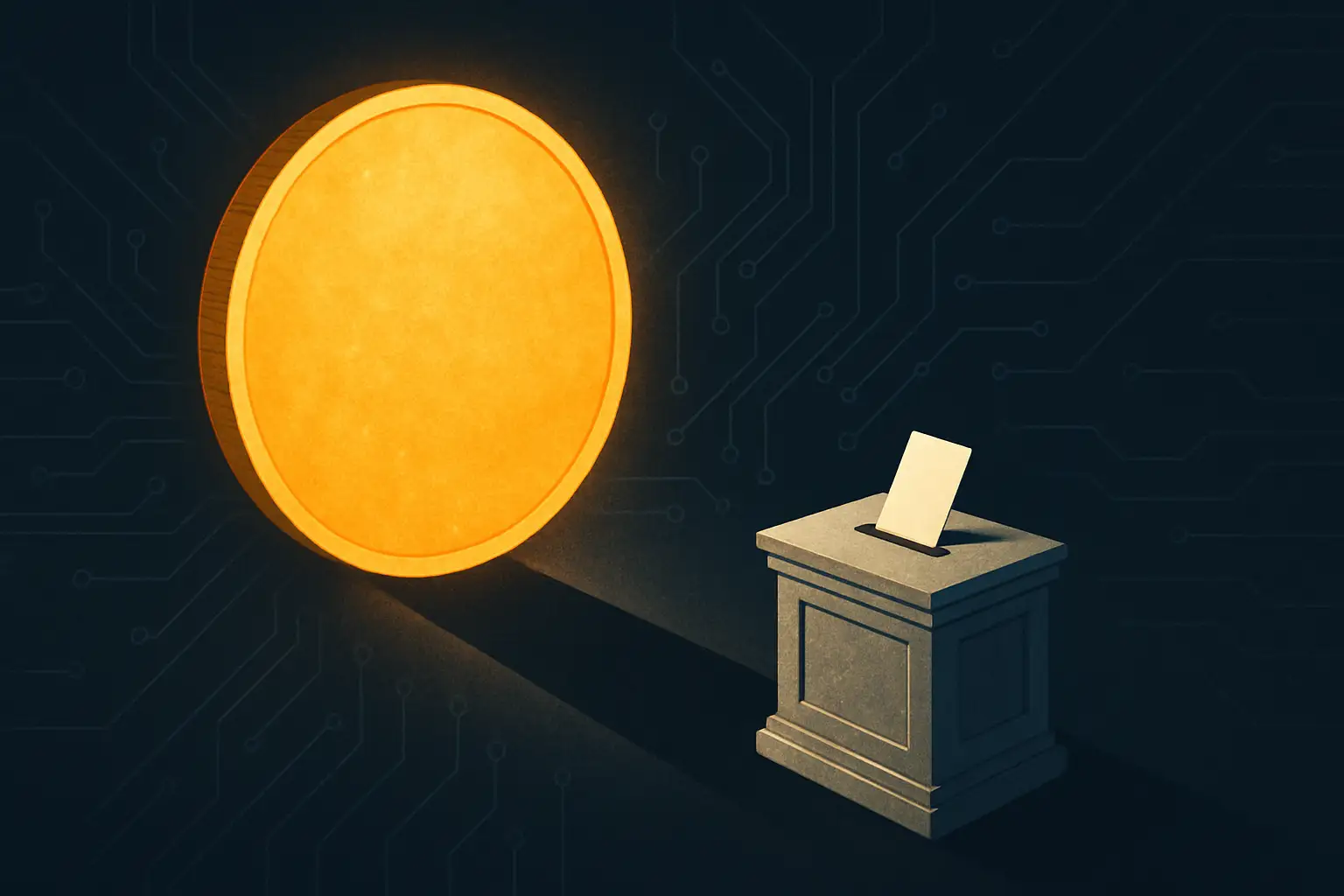


The Richest Voices in the Room
Crypto billionaires are not just accumulating wealth. According to a BBC investigation, a segment of the industry's most powerful figures are actively funding political movements, governance experiments, and ideological projects built on a single premise: that financial stake should determine political say.
The idea is not entirely new. Plutocracy, the rule of the wealthy, has existed in various forms throughout history. What is new is the technological infrastructure being assembled to make it algorithmic, borderless, and harder to challenge. Blockchain-based governance systems, crypto-funded political action, and the broader "network state" philosophy are converging in ways that traditional regulators are only beginning to understand.
The BBC report draws attention to how figures who built their fortunes in cryptocurrency are now deploying that capital well beyond financial markets, into the architecture of governance itself.
How Crypto Capital Is Funding Political Influence
The 2024 U.S. election cycle offered a striking preview. Crypto-linked donors poured hundreds of millions of dollars into congressional and presidential races, making the industry one of the largest political spending blocs in the country. Candidates who supported light-touch crypto regulation received significant backing, while those who favored stricter oversight faced well-funded opposition campaigns.
But the BBC investigation goes further than campaign finance. It examines ideological projects that argue democracy, as currently designed, is broken because it gives equal weight to every vote regardless of a voter's economic contribution or, in some framings, their knowledge and competence. The proposed fix, in these circles, involves systems where token holdings, wealth, or other markers of economic stake translate directly into governance power.
Some proponents frame this through the language of "skin in the game," borrowing from financial theory to argue that those with more to lose should have more say. Critics counter that this is simply a rebranding of oligarchy, one with a sleek technical interface on top.
Network States and the Push to Exit Democracy
One strand of thinking the report highlights involves the concept of "network states," a term popularized by tech investor Balaji Srinivasan. The model envisions groups of like-minded, typically wealthy individuals forming digital-first communities that eventually seek physical territory and, ultimately, sovereignty. These communities would operate under rules set by their founders and early members, with governance tied to participation in the community's economic system.
The appeal to crypto billionaires is straightforward. If you believe existing nation-states are inefficient or hostile to your interests, building a new one, or at least a parallel structure, becomes an attractive project. Several such experiments are underway globally, ranging from charter city proposals in developing nations to private island communities with their own governance charters.
The broader concern raised by the BBC's reporting is that these are not fringe fantasies. They are well-funded, seriously organized, and attracting talent from major technology companies and universities.
Why This Moment Matters for Crypto Regulation
For years, the mainstream critique of cryptocurrency focused on volatility, fraud, and environmental impact. The political dimension was treated as secondary. The BBC investigation suggests that framing may need updating.
When crypto wealth is used to elect friendly legislators, fund governance experiments that explicitly reject democratic equality, and build alternative political structures, the stakes of regulatory decisions extend far beyond consumer protection or financial stability. They touch on how democratic societies intend to govern themselves in an era when private capital can move faster than public institutions.
Regulators in the United States, European Union, and elsewhere are grappling with crypto policy primarily through a financial lens. The political economy argument, that the concentration of crypto wealth poses structural risks to democratic governance, has gained less traction in official policy circles, though it is becoming harder to ignore.
The BBC's reporting adds to a growing body of journalism and academic work examining whether the crypto industry's political ambitions are commensurate with its economic footprint, and whether existing democratic institutions are equipped to respond.
For ordinary observers, the core question is a simple one: in a system where money increasingly buys political access, and where new technologies are being built specifically to formalize that relationship, what happens to the principle of one person, one vote? The crypto billionaires profiled in the BBC investigation have their answer. Whether everyone else agrees is a different matter entirely.


Crypto & Markets Analyst
Jordan breaks down crypto markets and digital assets for everyday readers.