Crypto Markets Hold Steady as Explosions Hit Iran's Tabriz
Explosions reported in Iran's Tabriz sent geopolitical anxiety rippling through traditional markets, but crypto prices showed little reaction to the unrest.
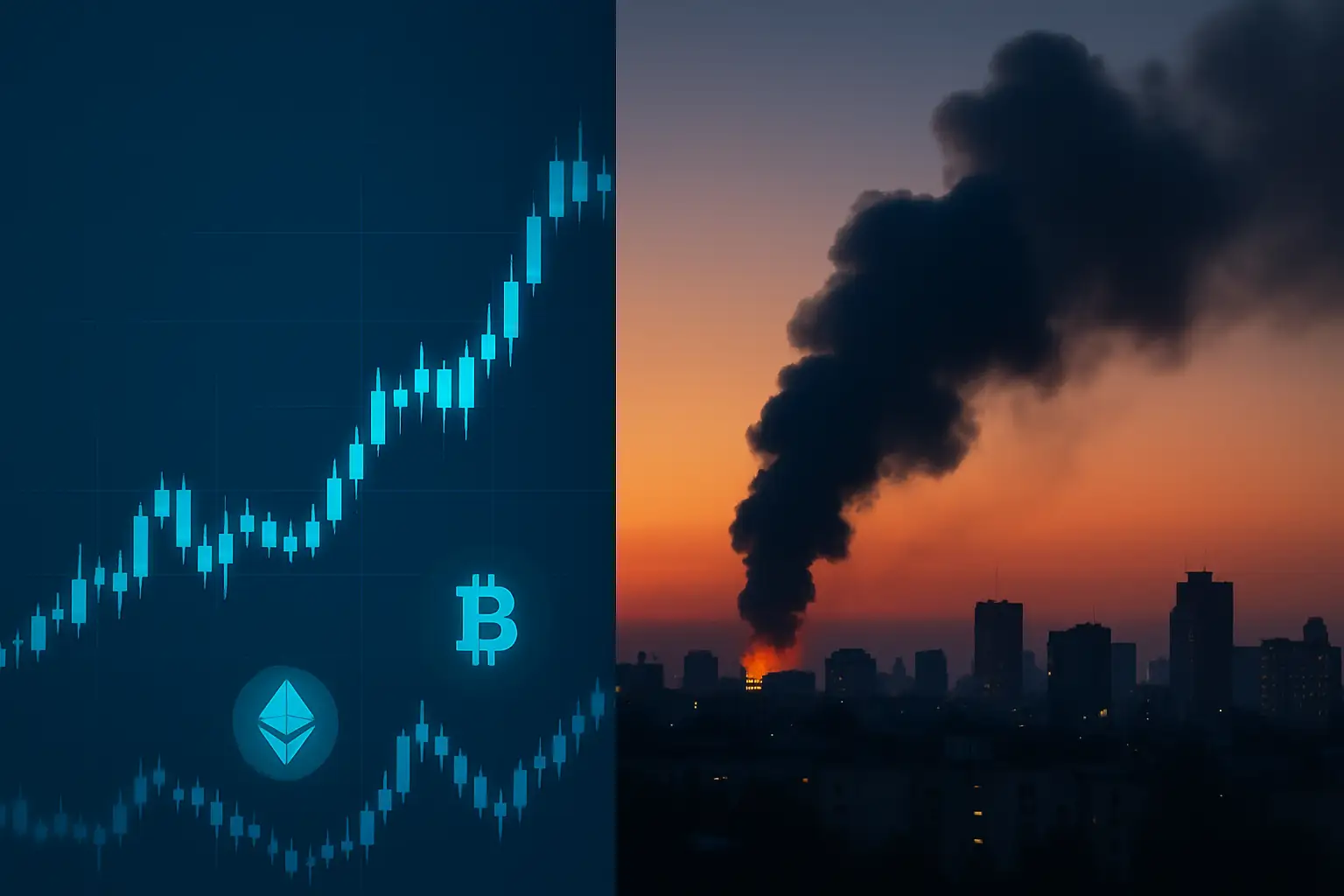


Blasts in Tabriz Raise Geopolitical Alarm
Explosions struck Iran's northwestern city of Tabriz, according to reports cited by Crypto Briefing, adding a fresh layer of tension to an already volatile region. The incidents drew immediate international attention and prompted concern about potential escalation in the Middle East.
Tabriz, a major industrial and commercial hub in Iran, is no stranger to regional instability, but the latest explosions intensified fears among analysts who track how conflict flashpoints can ripple into global financial markets.
Traditional safe-haven assets typically see a surge during such events. Gold tends to climb. Oil prices react to anything touching the Persian Gulf corridor. Yet crypto markets registered a notably muted response.
Crypto Markets Shrug Off the Shock
Despite the geopolitical tremors caused by the Tabriz explosions, crypto markets showed little sign of distress. Bitcoin and the broader digital asset market did not experience the kind of sharp sell-off or dramatic safe-haven inflow that some traders might have expected from a headline this alarming.
This pattern has repeated itself before. Crypto was once widely assumed to behave like a risk asset, dumping alongside equities whenever global uncertainty spiked. More recently, that relationship has grown less predictable. During some geopolitical flare-ups, Bitcoin has held firm or even gained ground, with some investors treating it as a hedge rather than a liability.
The Tabriz situation appears to fit that newer mold. Markets digested the news without significant price swings, suggesting traders either discounted the risk of wider escalation or were already positioned defensively.
Why Crypto Reacts Differently to Geopolitical Risk
Several factors help explain why crypto markets do not always mirror traditional market responses to geopolitical shocks.
First, crypto trades globally and continuously. There is no opening bell, no regional exchange that dominates price discovery. When news breaks in the middle of a low-liquidity window, the absence of large institutional moves can keep prices stable simply because fewer participants are actively repositioning.
Second, the relationship between crypto and macro risk has been evolving. Institutional adoption has brought more sophisticated hedging strategies into the market. Large holders do not necessarily liquidate Bitcoin at the first sign of geopolitical stress the way a retail trader might.
Third, Iran itself has a notable connection to crypto. Sanctions have long pushed Iranian businesses and individuals toward digital assets as a workaround for restricted access to the global banking system. Unrest inside Iran does not automatically translate into selling pressure on crypto. In some cases, it can generate demand.
What Traders Are Watching
The immediate threat from the Tabriz explosions did not appear to escalate into a broader regional conflict in the short window following the reports. That likely contributed to the calm in crypto markets. Traders tend to price in tail risks only when those risks look credible and imminent.
Still, the situation serves as a reminder of how quickly geopolitical headlines can shift market sentiment. A more severe escalation involving regional powers or energy infrastructure could produce a different result. Oil price spikes, for example, can feed inflation fears that eventually hit risk assets including crypto.
For now, the crypto market's steady posture in the face of the Tabriz explosions adds to a growing body of evidence that digital assets are developing a more complex and sometimes counterintuitive relationship with global instability. Whether that resilience holds through a more serious crisis remains an open question.


Crypto & Markets Analyst
Jordan breaks down crypto markets and digital assets for everyday readers.