How the FGC Has United Countries Long Before the World Cup
The fighting game community has long crossed borders and language barriers, building international bonds through competition that major sporting events are only beginning to replicate.


Fighting Games as a Global Language
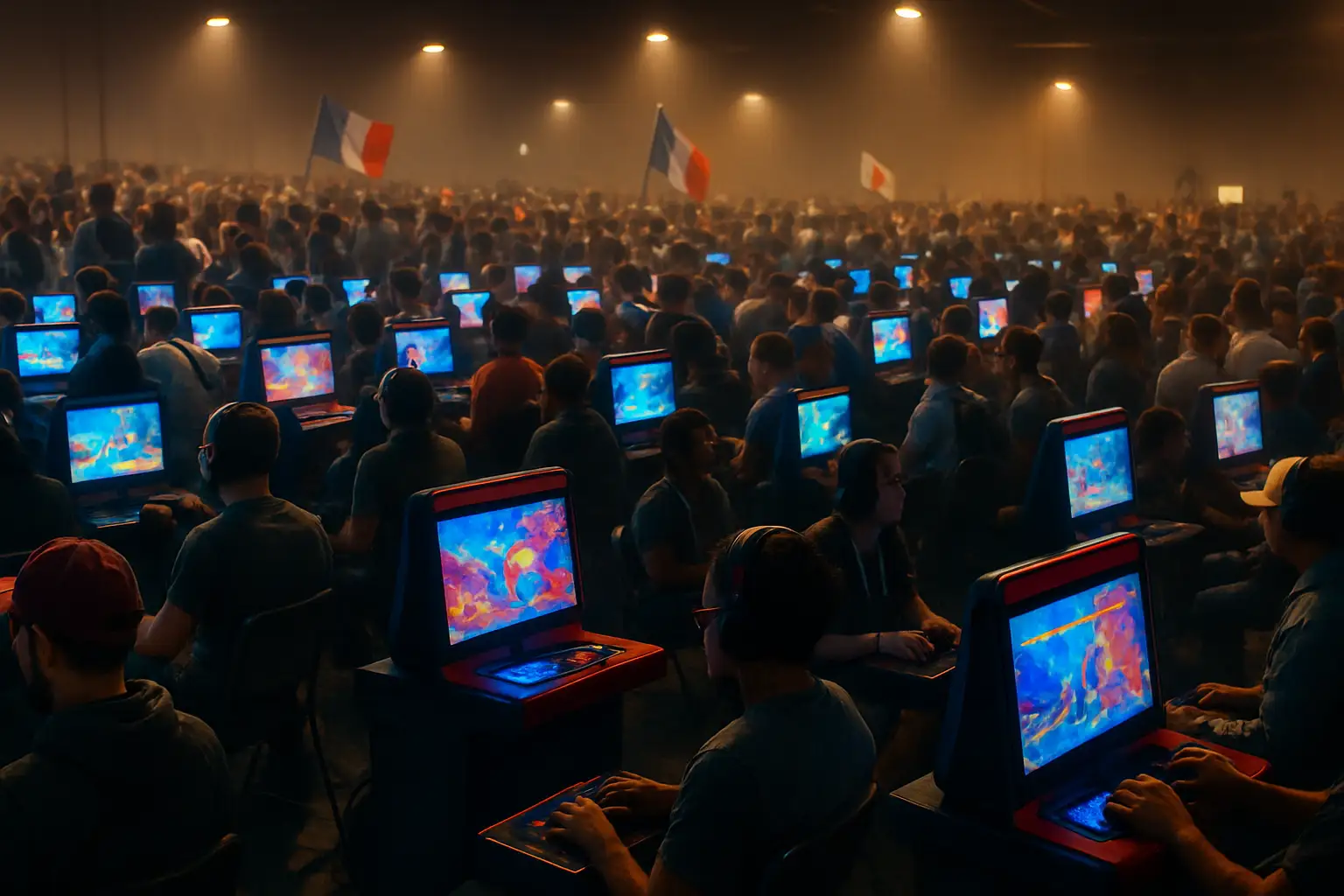
The fighting game community - the FGC - has been connecting players across borders for decades. Long before international esports organizations formalized global competition, and well before the World Cup became a talking point in gaming circles, people from Japan, the United States, Brazil, South Korea, France, and dozens of other countries were already sitting across from each other at arcade cabinets and tournament setups, communicating through the shared grammar of fighting games.
That idea, that fighting games function as a language of their own, has gained renewed attention following a piece from Esports Insider exploring just how deeply the FGC has woven together different national scenes into a single, largely borderless culture.
The concept is not abstract. A player from São Paulo and a player from Tokyo do not need a translator to understand what a punish, a mixup, or a neutral game means. The controller inputs, the frame data, the competitive logic - these form a vocabulary that travels without a passport.
Decades of Cross-Border Competition
What sets the FGC apart from many other competitive gaming scenes is how early the international exchange began. The arcade era of the late 1980s and 1990s created natural gathering points where national playing styles developed in relative isolation, then collided at major international tournaments. Japanese players brought technical precision and defensive discipline. American players brought aggression and adaptation. Brazilian players developed their own creative approaches.
When those styles met at events like Evolution Championship Series, known as EVO, the result was not just competition but cultural exchange. Players studied each other, adopted techniques, and returned home with new ideas. That cycle has continued across every generation of fighting games, from Street Fighter II to Tekken 8 and Street Fighter 6.
The community infrastructure that grew around this exchange is notable. Regional scenes developed their own local tournaments, their own commentary traditions, and their own player hierarchies, yet all of them fed into the same international ecosystem. A breakthrough performance at a local tournament in Lagos or Manila could earn a player recognition from fans in Los Angeles or London almost immediately.
Why the FGC Model Matters Now
The comparison to the World Cup is pointed. Major international sporting events generate enormous media coverage around the idea of countries competing on neutral ground, but the FGC has been doing exactly that, informally and continuously, for far longer. The difference is scale of audience, not depth of cross-cultural engagement.
In some ways the FGC model is more organic. Nobody mandated that players from different countries compete together. There is no governing body that scheduled the global exchange. It happened because the games themselves created enough common ground that national and language differences became secondary to competitive curiosity.
That organic quality has produced genuine friendships, rivalries, and mentorships across national lines. Players have relocated internationally to train together. Coaches from one country regularly work with top competitors from another. Content creators have built multilingual audiences by covering scenes that span continents.
What This Means for the Broader Esports Conversation
For esports as an industry, the FGC's history offers a useful reference point. Conversations about esports and international community often focus on League of Legends World Championships or global CS tournaments as the benchmark for cross-border appeal. The FGC's story suggests the roots of global gaming culture run deeper and started earlier than those franchised structures.
It also raises a question about visibility. The FGC's international culture has existed largely outside mainstream sports media coverage. Players who have competed across multiple continents, built followings in several languages, and contributed to genuine cross-cultural exchange have done so without the broadcast infrastructure that surrounds tier-one esports titles.
As fighting games continue to grow in competitive viewership, particularly with titles like Tekken 8 and Street Fighter 6 drawing strong tournament numbers, that history becomes more relevant. The community did not need a World Cup moment to go global. It was already there.


Football Correspondent
Alex covers football and the global game with fast, sharp analysis.