Spain Football Team Trains in Hazardous Air as Canadian Wildfire Smoke Spreads
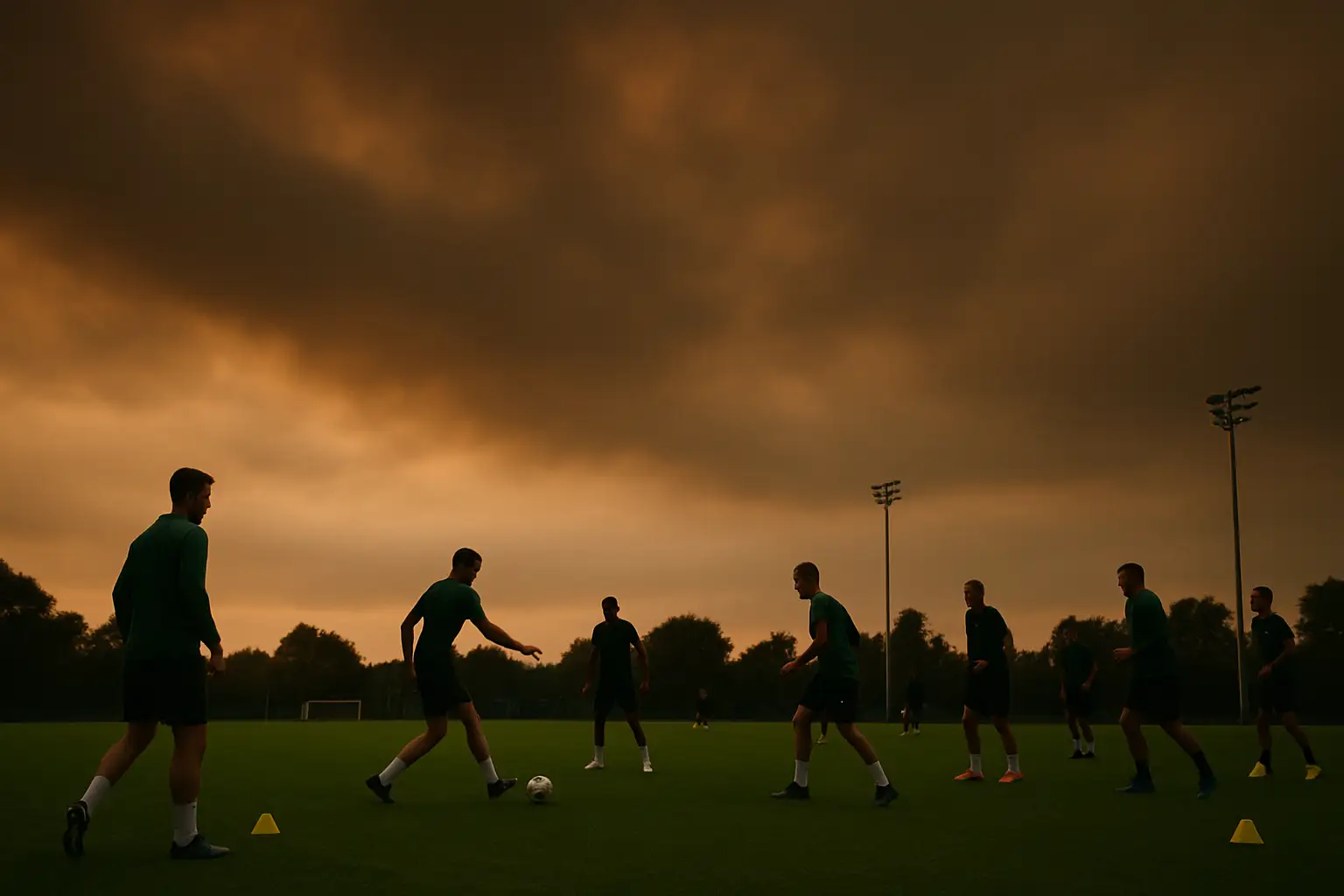
Spain's national football squad has been forced to train under hazardous air quality conditions after smoke from Canadian wildfires drifted across the region.


Spain's Training Camp Hit by Hazardous Smoke
Spain's national football team has found itself training in hazardous air quality conditions after smoke from wildfires burning in Canada drifted thousands of kilometres to affect the squad's preparation sessions. The development, first reported by ABC News and the Australian Broadcasting Corporation, highlights how environmental conditions far beyond a team's control can directly disrupt elite sport.
Wildfire smoke can travel vast distances through upper atmospheric currents. When it descends to ground level, it raises concentrations of fine particulate matter, the kind that irritates the respiratory system and can impair lung function, particularly during high-intensity physical activity. For professional footballers whose performance depends heavily on aerobic capacity, training in such conditions carries genuine health risks.
The Spanish squad's situation underlines a growing challenge for international football: major tournaments and training camps are increasingly scheduled during periods when environmental hazards, from extreme heat to poor air quality, are becoming more common.
What Hazardous Air Quality Means for Athletes
Air quality is typically measured using an Air Quality Index, or AQI. Readings classified as hazardous sit at the most severe end of the scale. At those levels, health authorities generally advise that everyone, including healthy adults and trained athletes, should avoid prolonged outdoor exertion.
For a football squad running high-intensity drills, pressing exercises, and match-simulation sessions, spending extended time outdoors in hazardous air puts players at risk of respiratory irritation, reduced oxygen uptake, and longer recovery times. Coaching staff face a difficult calculation: modify or cancel sessions and risk losing preparation time, or press ahead and potentially compromise player health before competitive fixtures.
There is no simple workaround. Moving sessions indoors can reduce exposure, but full training pitches are rarely available inside a standard venue, and tactical drills that require open space become difficult to replicate.
Canadian Wildfires and Their Long-Range Reach
Canada has experienced significant wildfire activity in recent years, with fires burning across vast stretches of forest. The smoke produced by these events does not stay local. Jet stream patterns and wind systems can carry particulate matter across the Atlantic, affecting air quality in parts of Europe days after the fires first ignite.
This cross-continental drift has already been documented on multiple occasions, with European cities recording elevated pollution readings traced directly back to North American fires. Spain, depending on prevailing winds, can sit in the path of these smoke plumes.
The fact that a football training camp has now been caught in such conditions adds a concrete, human dimension to what can otherwise seem like an abstract environmental issue. When elite athletes are forced to alter their preparation because of smoke originating on a different continent, the real-world consequences of large-scale wildfires become sharply apparent.
Football Camps and the Environment
Spain's situation is unlikely to be an isolated case as the climate continues to shift. Football governing bodies and national associations may need to build environmental monitoring more formally into their event-planning processes. Checking local air quality forecasts is a relatively straightforward step, but acting on those forecasts, by rescheduling sessions or sourcing indoor alternatives, requires flexibility that big tournament preparation schedules do not always allow.
For the Spain squad, the priority remains their competitive programme. But training under hazardous air quality conditions is a reminder that preparation for international football now involves variables that have nothing to do with tactics or fitness planning, and everything to do with the world outside the pitch.


Football Correspondent
Alex covers football and the global game with fast, sharp analysis.