Ceferin Tells Infantino to Resign Over World Cup Scandal
UEFA president Aleksander Ceferin has called on FIFA chief Gianni Infantino to step down amid a growing World Cup scandal, while ruling out any move to replace him himself.


Ceferin Calls on Infantino to Go
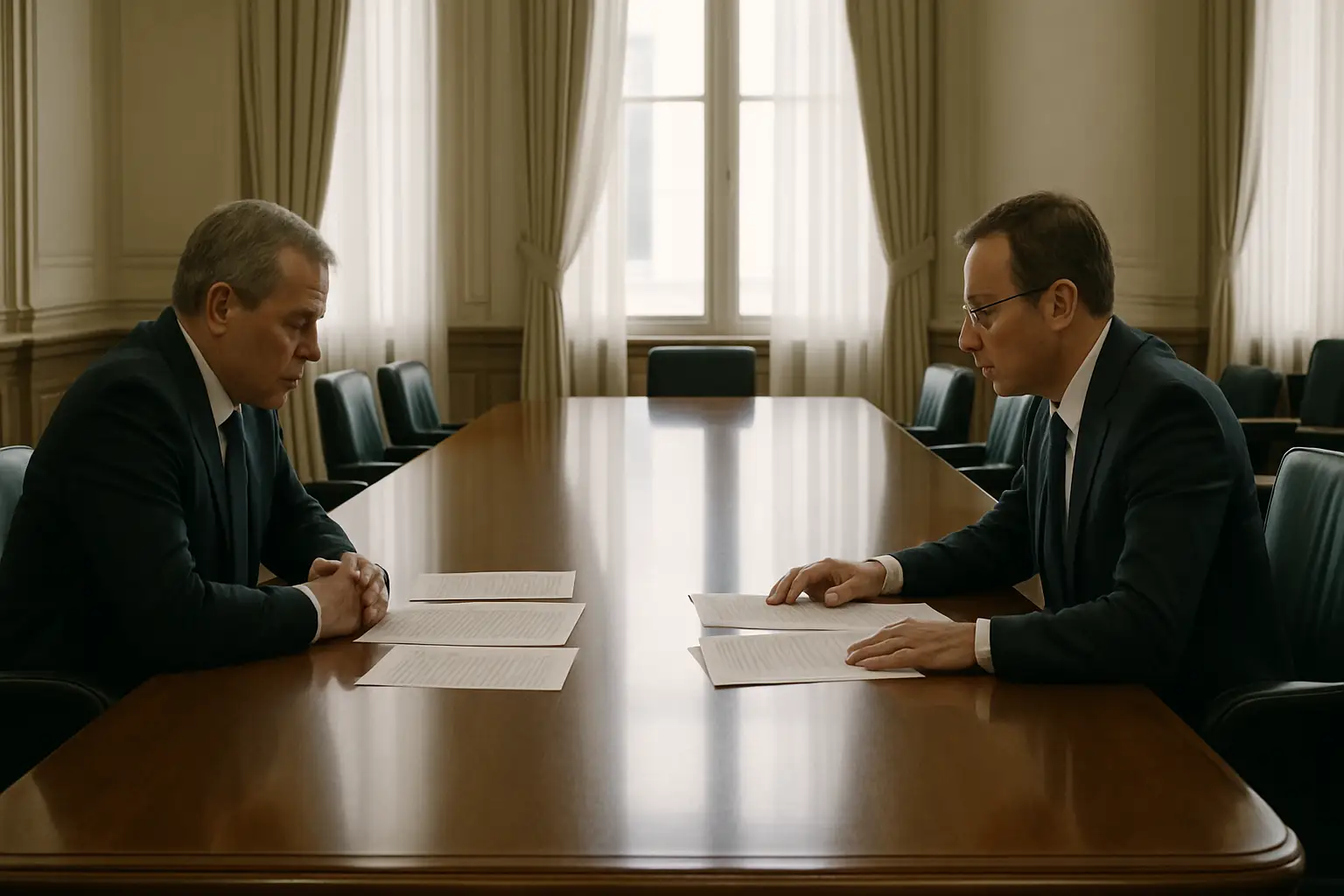
UEFA president Aleksander Ceferin has publicly called on FIFA president Gianni Infantino to resign, according to reporting by The Telegraph. The intervention comes as Infantino faces mounting pressure over a World Cup scandal, and it marks one of the sharpest public criticisms of the FIFA chief from a senior figure within world football's governing structures.
Ceferin's position is pointed but also limited in scope. While he made clear he believes Infantino should quit, he simultaneously ruled out putting himself forward as a replacement. That combination, pressure without personal ambition, gives the statement a particular weight. It is not the move of a rival angling for power, but a sitting UEFA president signalling that football's top job has become untenable for its current occupant.
The nature of the World Cup scandal has placed Infantino under serious scrutiny. Ceferin's call to resign is a rare moment of open discord at the highest level of the sport, where public disagreements between the heads of FIFA and UEFA are uncommon.
What the Scandal Means for FIFA
FIFA has operated for years under the shadow of governance controversies, and Infantino came to the role partly on a promise of reform after the corruption scandals that engulfed his predecessor Sepp Blatter. A fresh crisis, particularly one tied to the World Cup, strikes at the core of what Infantino has built his tenure around.
The World Cup is FIFA's flagship product and its primary source of revenue. Any scandal attached to it threatens not just the reputation of the president but the financial and commercial foundations of the organisation. Sponsors, broadcasters, and member associations all watch how FIFA responds to governance failures, and slow or inadequate responses carry real costs.
Ceferin's public statement adds pressure that is harder to dismiss than criticism from outside football. As the head of UEFA, which represents the most commercially powerful confederation in world football, his voice carries institutional weight. Member associations that might have stayed quiet are now watching to see whether others follow his lead.
Infantino's Position and What Happens Next
As of the reporting by The Telegraph, Infantino had not announced any intention to resign. FIFA presidents are elected by the full congress of member associations, meaning Ceferin alone cannot remove him. The process of replacing a sitting FIFA president requires either a voluntary departure or formal proceedings through FIFA's own governance structures.
Ceferin ruling out his own candidacy removes one obvious path forward. The question of who might succeed Infantino, if he were to leave, remains open. FIFA's next presidential election cycle will eventually force that conversation into the open, but for now the focus is on whether the scandal generates enough pressure, from enough directions, to make Infantino's position genuinely unsustainable.
For football fans and observers, the public rift between the heads of UEFA and FIFA is itself significant. These are institutions that need to cooperate on calendars, competitions, and regulations that shape the sport at every level. Open tension at the top makes that cooperation harder and introduces uncertainty across a range of football governance questions that were already complicated.
The coming weeks will test whether Ceferin's call resonates with other confederation heads or stays an isolated statement.


Football Correspondent
Alex covers football and the global game with fast, sharp analysis.