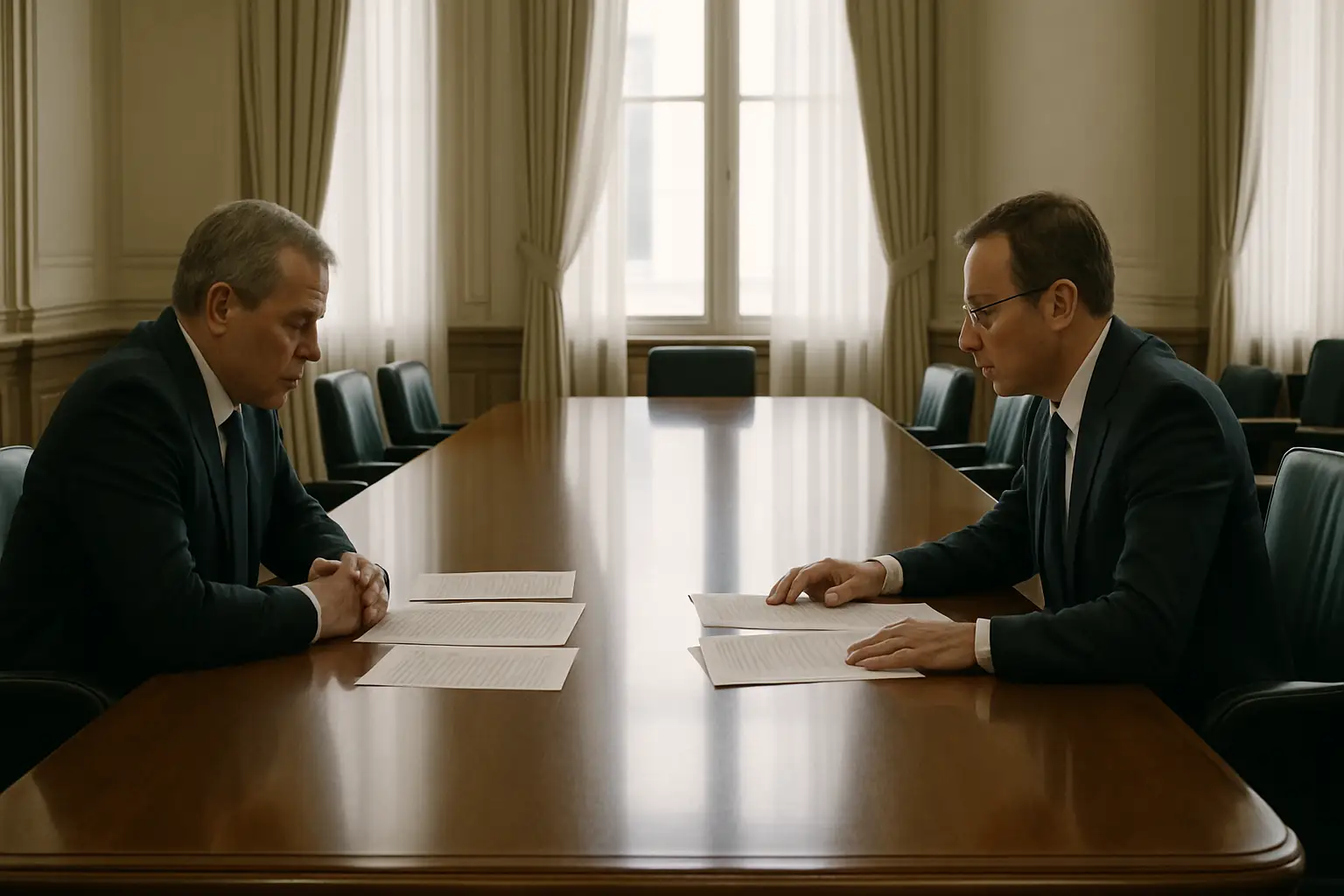
FIFA Boss Alleged Affair Rocks Football's Bitter Civil War
Calls to remove FIFA's president are growing louder after allegations of a personal affair surfaced, adding a volatile new layer to football's deepening governance crisis.



Affair Claims Put FIFA President Under Fresh Pressure
The power struggle tearing through world football has taken a sharp personal turn, with allegations of an affair involving FIFA's top boss now fueling demands from within the sport that he step down. The story, reported by Fox Sports, lands at a moment when football's governing bodies are already locked in bitter disputes over control, money, and the future of the game's biggest competitions.
The phrase circulating among critics is blunt: "You have to fire him." That sentiment reflects how seriously some officials and observers are treating the personal allegations, treating them not as a private matter but as a question of leadership credibility at the highest level of the sport.
The timing could hardly be worse for FIFA. The organization is already navigating intense internal tensions that some observers have described as a full-blown civil war - a fight over authority between FIFA and rival football bodies that has dragged on through legal threats, competing announcements, and public confrontations between powerful figures.
A Civil War That Just Got More Complicated
The underlying conflict in world football governance is not new. Disputes over tournament formats, broadcast rights, and the balance of power between continental confederations and FIFA's central leadership have been simmering for years. What has changed is the intensity - and now, apparently, the personal dimension.
Allegations of a romantic affair involving a sitting FIFA president cross a line that many in football's corridors of power consider significant. Governance experts have long argued that personal conduct and institutional credibility are linked, especially in an organization that has spent years trying to rebuild its reputation after the corruption scandals of the last decade.
For FIFA's critics, the affair claims hand them a new and potent argument. Rather than debating policy or tournament structures, they can now point to personal behavior as grounds for removal - a simpler case to make to the public and to member associations that ultimately hold voting power.
What Happens Next
Whether the allegations trigger any formal process inside FIFA remains to be seen. The organization has internal ethics mechanisms, though those bodies have themselves faced scrutiny over independence and effectiveness in the past.
Member associations - the national football federations that make up FIFA's voting base - will be watching closely. Their calculus is partly political and partly practical: any prolonged scandal at the top of the organization creates uncertainty that filters down to contracts, competition planning, and commercial deals.
The civil war framing matters here. If rival factions see the affair allegations as a weapon rather than a genuine governance concern, the dispute risks becoming even more entrenched, with personal attacks substituting for substantive arguments about how world football should be run.
For now, the pressure is building. The demand being voiced - that the FIFA boss must go - is out in the open, and the organization will need to respond in some form. How it does so will say a great deal about whether FIFA has genuinely reformed its governance culture or whether the old patterns of circling the wagons around powerful figures remain firmly in place.


Football Correspondent
Alex covers football and the global game with fast, sharp analysis.