Mexico's Search Collectives Win a Spot at the 2026 World Cup
Grassroots groups that search for missing persons in Mexico have secured a symbolic place at the upcoming World Cup, drawing global attention to a crisis affecting thousands of families.


Search Collectives Take Their Cause to the World's Biggest Stage
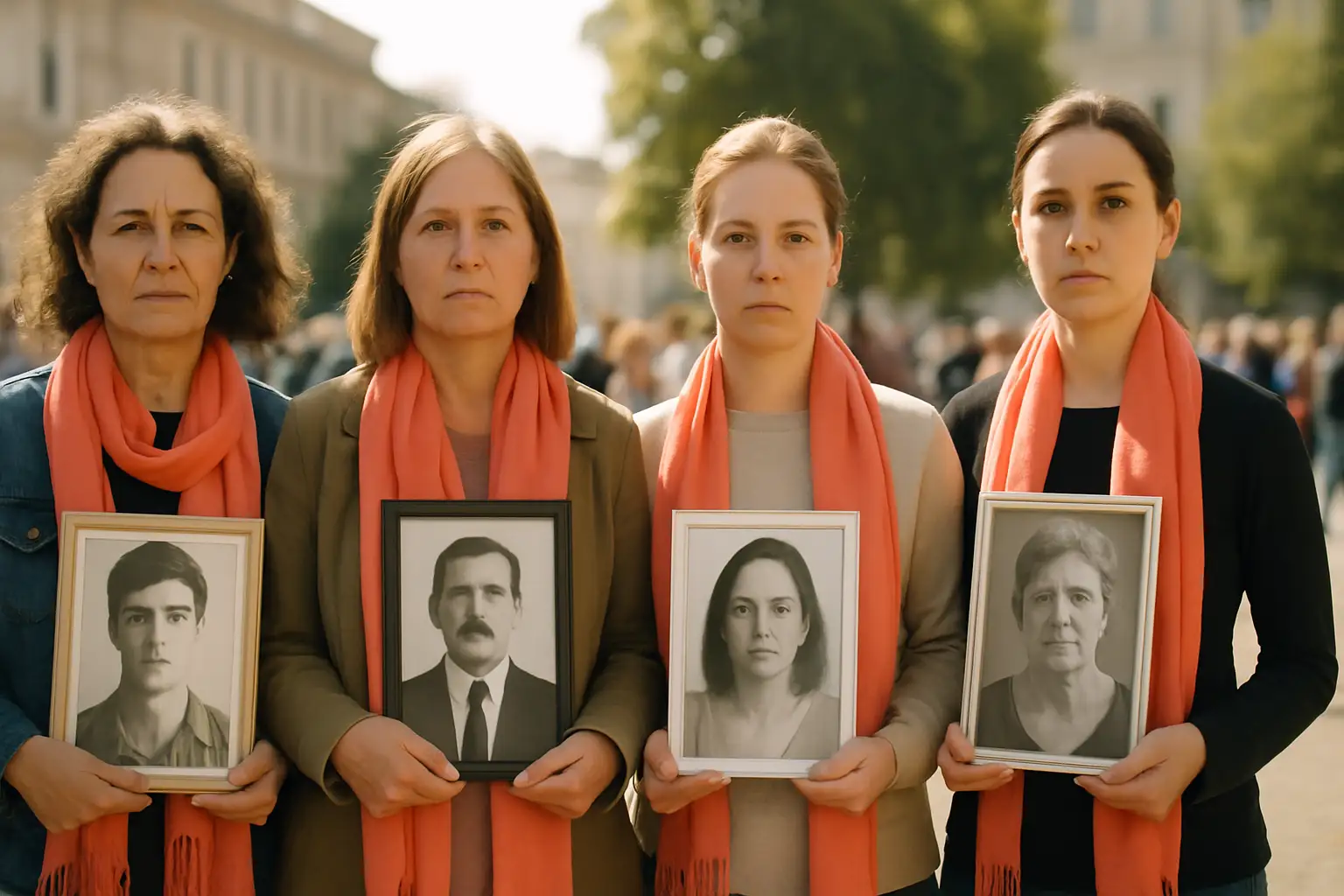
Mexico's search collectives, the grassroots groups formed by families looking for tens of thousands of missing persons across the country, have claimed a place at the 2026 FIFA World Cup. The move is being seen as a significant moment for a civil society movement that has spent years operating in the margins, digging through clandestine graves and pushing an often unresponsive government for answers.
The collectives, made up largely of mothers, sisters, and daughters of the disappeared, have turned to one of the planet's most-watched sporting events to amplify a crisis that Mexico's authorities have struggled to contain. With the World Cup set to be co-hosted by the United States, Mexico, and Canada, the groups see a rare opening to put their message in front of a global audience that might otherwise never encounter it.
According to reporting by Global Issues, the collectives are not arriving at this moment by accident. They have spent years building credibility through direct action, often searching terrain on foot when police refused to act. That credibility is now helping them open doors that were previously closed.
What the Collectives Are Fighting For
Mexico has one of the world's highest rates of enforced disappearances. Official figures put the number of registered missing persons at over 100,000, though advocates argue the real number is higher. Many disappearances are linked to organized crime, while others involve state actors, a pattern that has made official investigations unreliable in the eyes of victims' families.
The search collectives emerged as a direct response to that vacuum. Rather than waiting for government action, families began organizing their own searches, pooling knowledge, equipment, and emotional support. Over time, these groups evolved into sophisticated operations capable of identifying burial sites, collecting forensic evidence, and lobbying lawmakers.
Their presence at the World Cup is framed as an extension of that same logic: if the government will not bring the crisis to the public, the families will bring it themselves, using whatever platform becomes available.
A Global Audience, a Local Crisis
The 2026 World Cup is scheduled to take place across North America, with several matches hosted in Mexican cities. That geography matters. The collectives will have a chance to engage with international media, foreign governments, and millions of visiting fans in ways that domestic press coverage alone cannot achieve.
Human rights organizations have long argued that international pressure is one of the few tools that moves the needle on disappearances in Mexico. High-profile events like the World Cup create a concentrated window when that pressure can be applied most effectively.
The collectives' decision to claim space in and around the tournament reflects a broader shift in how civil society groups in Mexico are thinking about advocacy. Traditional channels, including petitions, protests, and legal complaints, remain important. Increasingly, however, these groups are looking for moments of maximum visibility to break through the noise.
For the families involved, the stakes are intensely personal. Every public appearance is another chance that someone, somewhere, might recognize a name or a face and come forward with information. The World Cup, with its billions of viewers, represents that possibility at an unprecedented scale.
Global Issues, which reported on the collectives' efforts, noted that the groups have found ways to connect their cause to the tournament without disrupting the event itself, focusing instead on side events, media engagements, and symbolic actions that put missing persons at the center of the conversation.
The coming months will test whether the spotlight translates into concrete pressure on Mexican authorities. What is already clear is that Mexico's search collectives have turned grief into organization, and organization into a strategy that now reaches one of sport's grandest stages.


Football Correspondent
Alex covers football and the global game with fast, sharp analysis.