NCAA Women's Flag Football Gains Ground as a Varsity Sport
NCAA Women's Flag Football is expanding its footprint at the college level, with programs growing and the sport drawing fresh attention from athletes and administrators alike.


NCAA Women's Flag Football Builds Momentum on College Campuses
NCAA Women's Flag Football is carving out serious space in college athletics. The sport, which has been gaining traction at the high school level for years, is now drawing sustained attention from universities, athletic departments, and the NCAA itself as a legitimate varsity offering for women.
The Columbia Missourian has reported on the sport's continued rise, reflecting a broader national conversation about expanding competitive opportunities for female athletes under the college sports umbrella. Flag football's growth at the NCAA level represents one of the more significant developments in women's college sports in recent years.
What Makes Flag Football Different
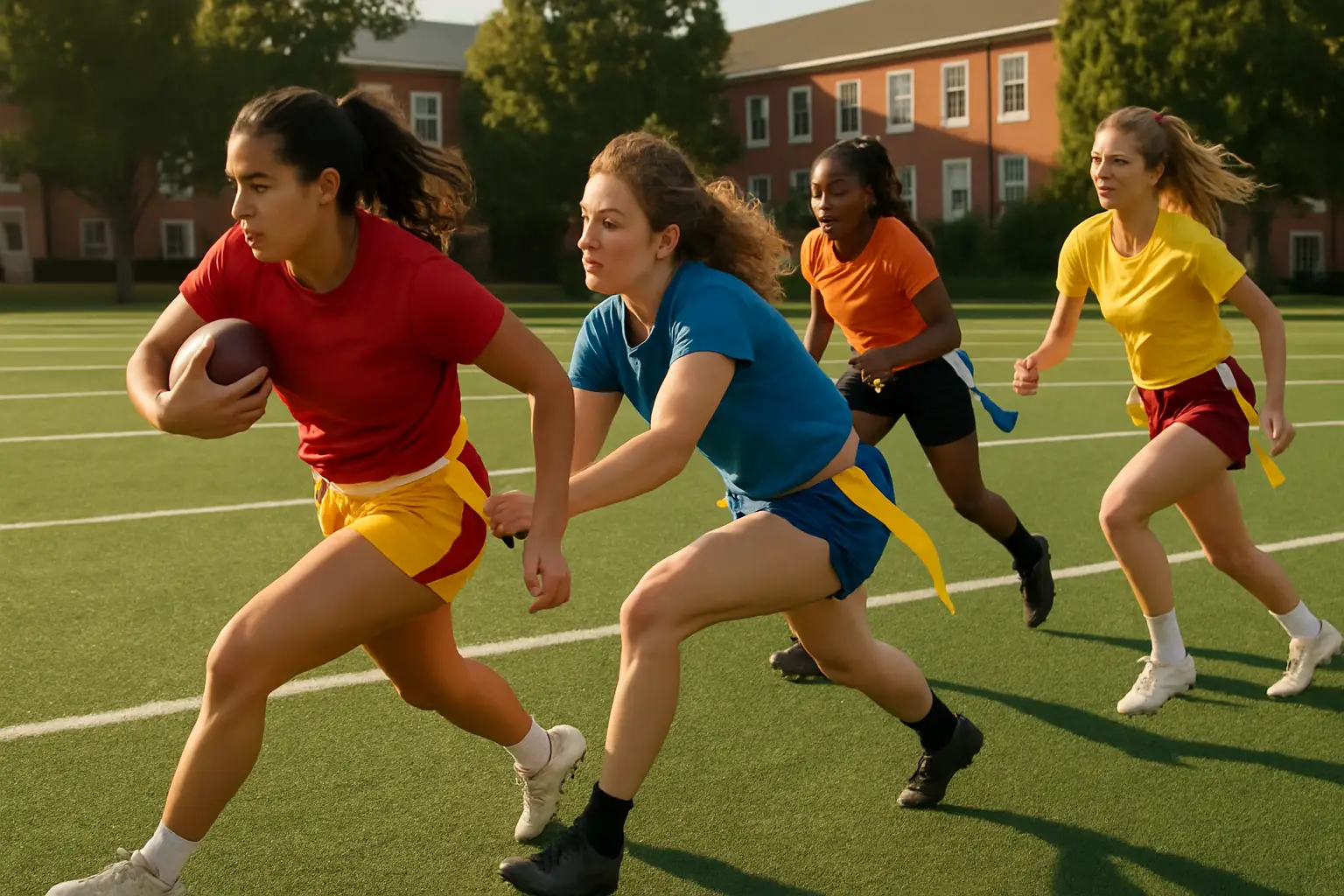
Unlike tackle football, flag football removes contact from the equation. Players pull flags from a belt rather than tackling ball carriers, which dramatically reduces injury risk while preserving the core skills of the game: throwing, route running, pass coverage, and play-calling.
That combination has made it attractive to schools looking to add women's sports without the infrastructure costs tied to other programs. Fields are shared with existing football programs. Equipment costs are low. Roster sizes are manageable. For athletic directors balancing budgets while trying to meet Title IX requirements, flag football checks several boxes at once.
The sport also draws from a growing pipeline. Girls' flag football programs at the high school level have expanded significantly across states like Florida, Georgia, and California, producing athletes who arrive at college already familiar with the game and eager to compete at the next level.
NCAA's Role in the Sport's Development
The NCAA has been deliberate in how it has approached women's flag football. The governing body has explored pathways for the sport to gain full championship status, which would put it alongside established programs like soccer, basketball, and softball in terms of official NCAA recognition.
That kind of institutional backing matters. Championship status means scholarship opportunities, official recruiting timelines, and national exposure through NCAA-run tournaments. For prospective athletes weighing their options, those details are not minor. They determine whether a sport feels like a real opportunity or a side project.
Schools that have moved early to add women's flag football programs are positioning themselves ahead of what many in college athletics expect to be a significant wave of new programs. As the sport's profile rises, recruiting competition is likely to follow.
Broader Context for Women's College Sports
The growth of NCAA Women's Flag Football does not happen in isolation. It comes during a period of intense focus on equity in college athletics, driven by Title IX enforcement, public pressure, and a genuine shift in how universities think about women's sports as both a competitive and commercial opportunity.
Name, image, and likeness rules have also changed the landscape. Female athletes in emerging sports now have avenues to build personal brands and generate income that simply did not exist a few years ago. That changes the calculus for talented athletes deciding where to invest their time and energy.
Flag football benefits from the NFL's active support as well. The league has backed efforts to grow the women's game at multiple levels, seeing it as a way to deepen the sport's connection with a broader audience. NFL involvement brings visibility, funding, and credibility that purely grassroots efforts would struggle to generate on their own.
As reporting from the Columbia Missourian highlights, the conversation around NCAA Women's Flag Football is no longer theoretical. Programs are forming, athletes are competing, and the sport is finding its footing within the formal structure of college athletics. The next few years will likely determine how central it becomes to the broader women's sports landscape.


Football Correspondent
Alex covers football and the global game with fast, sharp analysis.