
Spain's World Cup Glory Built on a Nation's Obsession With the Ball
Spain's latest World Cup triumph reflects more than tactics. It speaks to a deep national culture of possession football and collective identity on the global stage.


Spain's Football Philosophy Delivers on the Biggest Stage
Spain's World Cup glory has once again put the country's relationship with football under the spotlight. More than just a sporting achievement, the triumph reflects a culture built around ball control, short passing, and a collective style that has defined Spanish football for decades. The nation's obsession with possession - sometimes called "ball worship" - has translated into sustained success at the highest level of international competition.
This is not a story about one squad or one tournament cycle. It is about an entire ecosystem: academies, coaching philosophies, and regional clubs that have spent generations teaching young players to keep the ball moving, to trust teammates, and to treat possession as a form of control.
For Spain, winning is almost secondary to the way they win. The method matters as much as the result, and that mentality has become a source of shared national pride that stretches well beyond the stadium.
A Style That Unites a Divided Nation
Spain is a country with deep regional identities. Catalonia, the Basque Country, Galicia and others each carry their own languages, histories, and loyalties. Club football often reflects those divisions sharply. Yet the national team has repeatedly served as a rare point of unity.
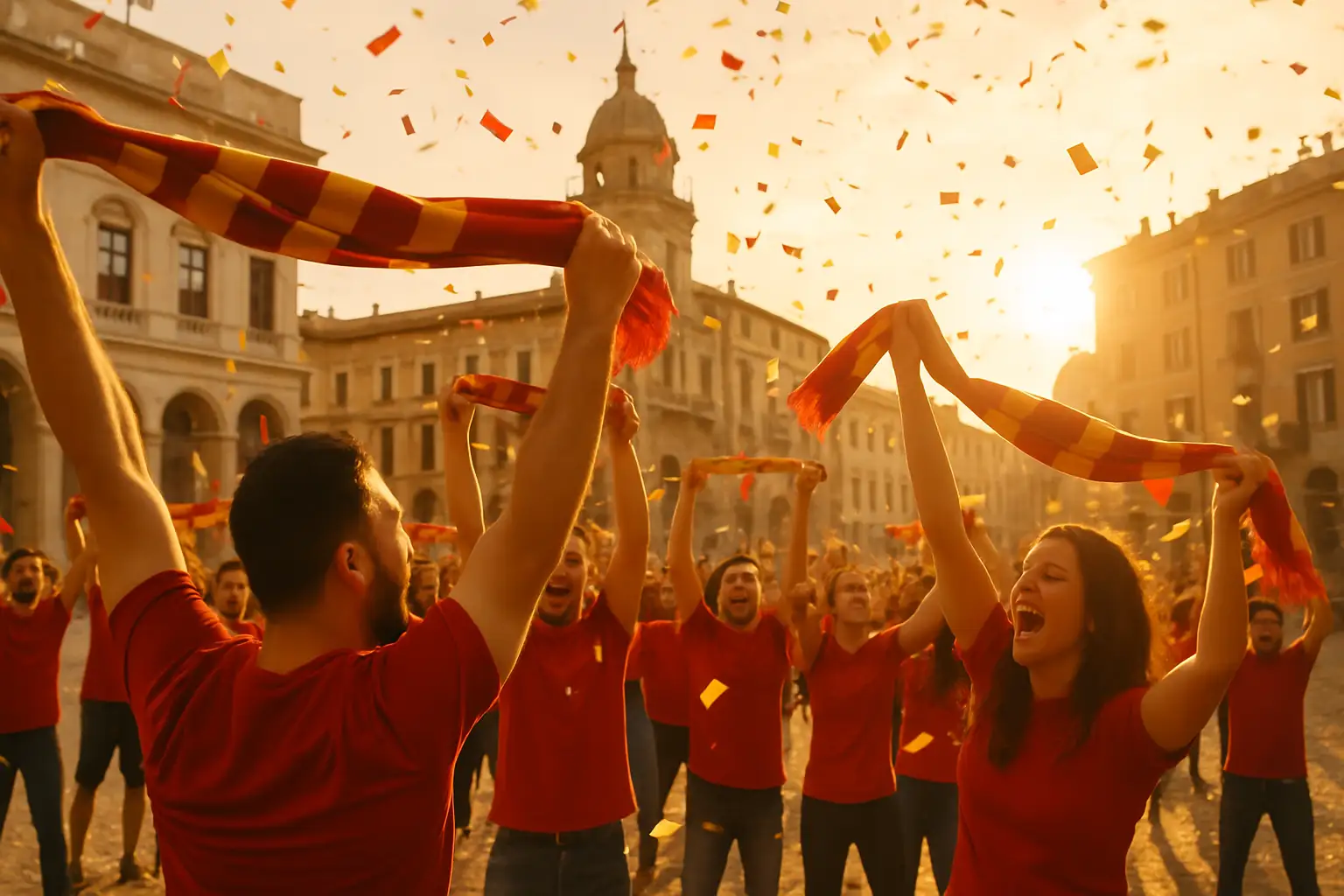
When Spain wins, people celebrate across those regional lines. The shared embrace that follows a World Cup victory is not something any politician could manufacture. It happens organically, driven by football and the particular pride that comes from watching a team perform with such precision and confidence.
That unity is partly a product of the style itself. Possession football requires every player to contribute. There are no passengers in a system built on movement and quick decision-making. When it works, the collective effort is visible to every fan, and the sense of shared ownership over the victory runs deep.
The Roots of Spanish Ball Culture
The foundations of Spain's approach were laid over many years, with clubs like FC Barcelona and Athletic Club developing distinct philosophies that emphasized technical skill from a young age. Spanish youth football has long prioritized touch, vision, and positional awareness over raw physicality.
This investment in technical development produced a generation of players who could execute the possession-based model at the highest level. Coaches at the national level inherited talented squads who already understood how to play together, making the transition to international football relatively seamless.
The model has been studied and copied around the world, but Spain's advantage has always been the depth of belief in the system. Players grow up inside it. By the time they reach the senior national team, the philosophy is second nature.
What the World Cup Win Means Going Forward
Spain's World Cup success carries implications beyond the trophy. It reinforces the value of a long-term, structured approach to player development. In an era when many nations chase quick fixes through naturalization policies or tactical shortcuts, Spain's model stands as evidence that sustained investment in a coherent football identity pays off.
For Spanish fans, the victory is also personal. Football in Spain is woven into daily life in a way that few other countries can match. Matches are social events, debated in bars and family kitchens with the same intensity as any political issue. A World Cup win lands differently in that context. It becomes part of the cultural fabric, a shared memory that crosses generations.
The Star's reporting on Spain's triumph highlighted this dimension, framing the win not just as a sporting result but as a moment of national cohesion. That framing resonates because it reflects something real about how football functions in Spanish society.
The challenge now is sustaining it. Spain has faced periods of transition before, when a golden generation fades and the next group of players must prove they can carry the same philosophy forward. History suggests the country's football infrastructure is well equipped to meet that challenge, but the work is never finished.


Football Correspondent
Alex covers football and the global game with fast, sharp analysis.