Why Does FIFA Still Exist? The Question That Won't Go Away
FIFA's long record of corruption scandals and governance failures has renewed a pointed question: what purpose does the world football body actually serve?



A Governing Body Under Permanent Scrutiny
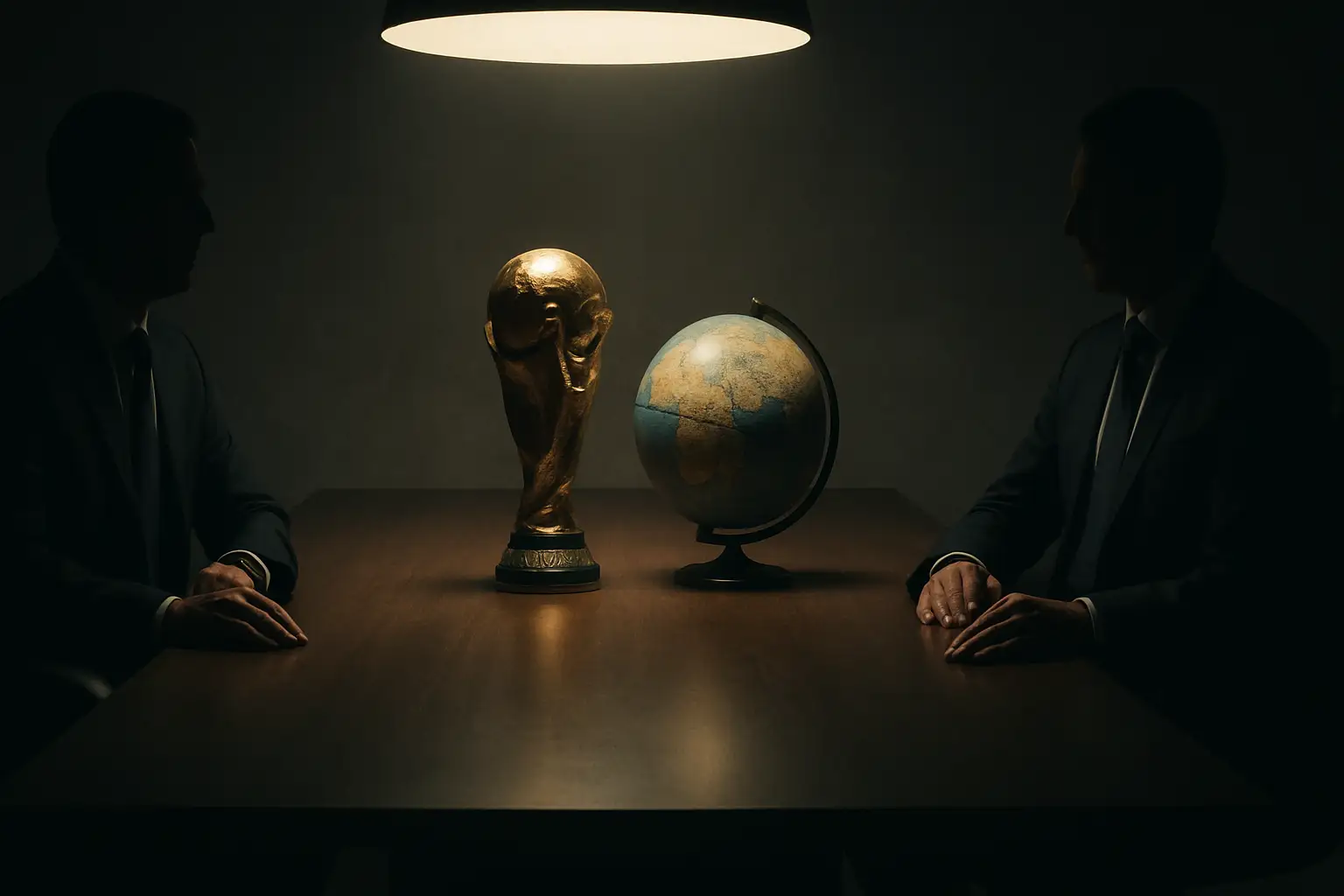
FIFA's right to exist is back under the microscope. The Globe and Mail raised the question directly in a recent piece, asking why the world's most powerful football governing body continues to operate largely unchallenged despite a decades-long trail of corruption, mismanagement, and ethical failures.
It is a fair question. FIFA controls the sport played by more people than any other on earth. It owns the World Cup, the most watched sporting event in history. That commercial power gives it enormous leverage over member associations, broadcasters, sponsors, and governments. And that leverage, critics argue, is precisely what has allowed its worst tendencies to go uncorrected for so long.
The organization's problems are not recent. The 2015 U.S. Department of Justice indictments swept up dozens of FIFA officials and marketing executives on charges including racketeering, wire fraud, and money laundering. Sepp Blatter, who led FIFA for 17 years, was banned from football-related activity by FIFA's own ethics committee. His successor, Gianni Infantino, has drawn his own share of controversy, including a criminal investigation opened in Switzerland, though he has denied any wrongdoing.
Corruption as a Structural Problem
The pattern here is not a series of isolated incidents. It is structural. FIFA distributes billions of dollars to its 211 member associations with limited oversight. Smaller associations in particular have historically depended on FIFA development money, which gives the central body enormous influence over how those associations vote in elections and on governance reforms.
That dependency loop helps explain why serious reform has been so difficult to achieve. Member associations that rely on FIFA funding have little incentive to push for the kind of independent oversight that might reduce their own allocations or expose how money has been spent locally. Critics have pointed to this dynamic for years, but the cycle continues.
World Cups awarded to Qatar and the United States, Canada and Mexico for 2026 have both generated scrutiny, though for different reasons. Qatar's 2022 tournament drew sustained international criticism over the treatment of migrant construction workers and the country's laws affecting LGBTQ+ people. FIFA collected record revenues from that tournament while deflecting most of the reputational fallout.
What Would Replacing FIFA Actually Look Like?
The Globe and Mail's question is pointed, but dismantling FIFA is not straightforward. The organization is embedded in the international football calendar, the qualifying system for every major tournament, and the regulatory framework that governs player transfers and national team eligibility worldwide. Pulling that apart without a credible alternative in place would create chaos across every level of the game.
Some reform advocates have called for genuine independence in FIFA's audit and compliance functions, stronger enforcement from the Court of Arbitration for Sport, and greater transparency in how World Cup hosting rights are awarded. Others have argued that pressure from major sponsors and broadcasters, the entities that actually fund FIFA's revenues, represents the most realistic lever for change.
European football's governing body UEFA has occasionally positioned itself as a counterweight, and the threat of a breakaway competition, as seen in the failed European Super League attempt in 2021, showed that top clubs are willing to act outside FIFA's framework when they believe their financial interests are not being served. That threat has not translated into governance reform, but it illustrated how fragile FIFA's authority could become if the sport's wealthiest clubs and leagues decided to act collectively.
The Accountability Gap
What the Globe and Mail piece captures is a wider frustration: FIFA is accountable to almost no one in any meaningful external sense. It is not a government. It is not subject to standard corporate governance rules. Its internal ethics processes have been criticized as slow, inconsistent, and prone to protecting powerful figures.
Fans have little direct voice. Players have some influence through their unions but limited structural power inside FIFA itself. Broadcasters and sponsors have historically prioritized access to the World Cup over public pressure campaigns.
The body persists because the product it controls, global football and the World Cup in particular, is simply too valuable for stakeholders to walk away from. That commercial reality insulates FIFA from the kind of accountability that might force genuine change.
Whether the next cycle of scandals will finally shift that calculation remains an open question. Based on the historical record, there is little reason for optimism, but the debate about FIFA's legitimacy is not going away.


Football Correspondent
Alex covers football and the global game with fast, sharp analysis.