World Cup Commercialization Faces Growing Scrutiny
A New Yorker report raises hard questions about money, power, and whether the World Cup can remain a sporting event rather than a commercial product.



The World Cup and the Question of Who It Belongs To
The World Cup is the most-watched sporting event on the planet. That scale has always attracted money, but a recent report from The New Yorker argues that commercial pressure on the tournament has reached a point where the soul of the competition is at stake. The central question the piece raises is straightforward: does the World Cup still belong to football, or has it been handed over to the highest bidder?
The report does not arrive in a vacuum. FIFA has expanded the men's World Cup to 48 teams starting with the 2026 edition, co-hosted by the United States, Canada, and Mexico. Critics have long argued that decision was driven by the opportunity to sell more broadcast slots and sponsorship inventory, not by any sporting rationale. A larger tournament means more games, more eyeballs, and more revenue, but not necessarily better football.
Money Has Always Been Part of the Game
It would be naive to pretend that money and the World Cup are new acquaintances. FIFA's commercial partnerships date back decades, and the organization has been rocked repeatedly by corruption scandals tied directly to the business of hosting and broadcasting the tournament. The 2015 FIFA corruption indictments in the United States exposed a system in which marketing rights and hosting votes were treated as commodities to be bought and traded.
Since then, FIFA under president Gianni Infantino has pursued an aggressive revenue expansion strategy. New competitions, new formats, and new host nation deals have followed in quick succession. Supporters of this approach argue that greater revenue allows FIFA to distribute more money to member associations, particularly in lower-income football nations. Opponents say the organization has lost any pretense of putting the sport first.
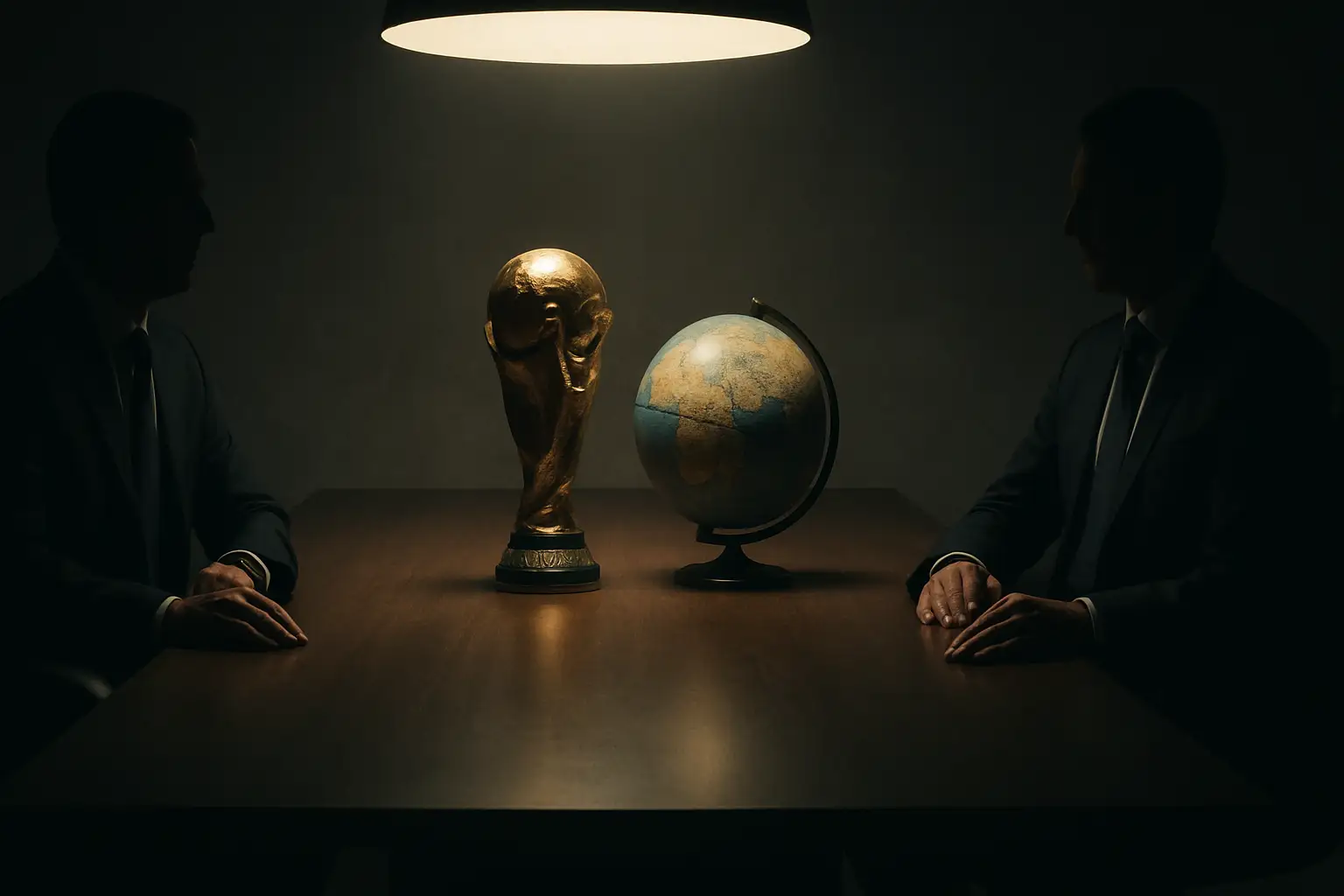
The New Yorker's framing, that the World Cup is not for sale, is less a legal statement than a moral one. The argument is that some things, including the communal experience of a global football tournament, carry a value that cannot be reduced to a rights fee or a naming deal.
What Is Actually at Risk
The practical concerns are several. First, there is the question of host nation selection. Qatar 2022 brought the issue of hosting rights into sharp relief. Awarding the tournament to a country with summer temperatures that made outdoor football dangerous, a record on migrant labor that drew international condemnation, and a domestic football culture that could generously be described as modest, signaled to many observers that other factors outweighed sporting merit.
Second, the expansion of the tournament itself changes the competitive texture of the event. More teams means more mismatches in the group stage, longer gaps between matches for contending nations, and a format that rewards endurance as much as quality. Broadcasters benefit from wall-to-wall content. Fans sitting through a 0-0 draw between two teams that have no realistic path to the knockout rounds may feel differently.
Third, there is the cost to host cities and ordinary supporters. Ticket prices for major tournaments have climbed steeply over successive cycles. Local fans in host nations often find themselves priced out of attending games in their own cities, with hospitality packages and corporate allocations absorbing large portions of available seats.
The Broader Debate
The New Yorker piece reflects a tension that runs through elite sport more broadly. Private investment, sovereign wealth funds, and global media conglomerates have reshaped football at every level, from club ownership to broadcasting rights to the sport's governing structures. The World Cup sits at the top of that system, and what happens to it sends signals downward through the entire game.
None of this means the tournament is beyond saving or that every commercial arrangement is corrupt. Sponsorship revenue does flow to development programs. Broadcast deals do bring the sport to billions of people who could not otherwise watch. The relationship between commerce and competition in football is genuinely complicated.
But the report from The New Yorker is a useful provocation. It asks fans, administrators, and sponsors alike to consider what they actually want the World Cup to be, and whether the decisions being made right now are consistent with that. The answers are not obvious, and the stakes are high enough that the question deserves more than a press release in response.


Football Correspondent
Alex covers football and the global game with fast, sharp analysis.