MotoGP Front Holeshot Devices Banned Starting at Assen
MotoGP has banned front holeshot devices from the Dutch TT at Assen onwards, marking a significant technical regulation change mid-season.


MotoGP Pulls the Plug on Front Holeshot Devices
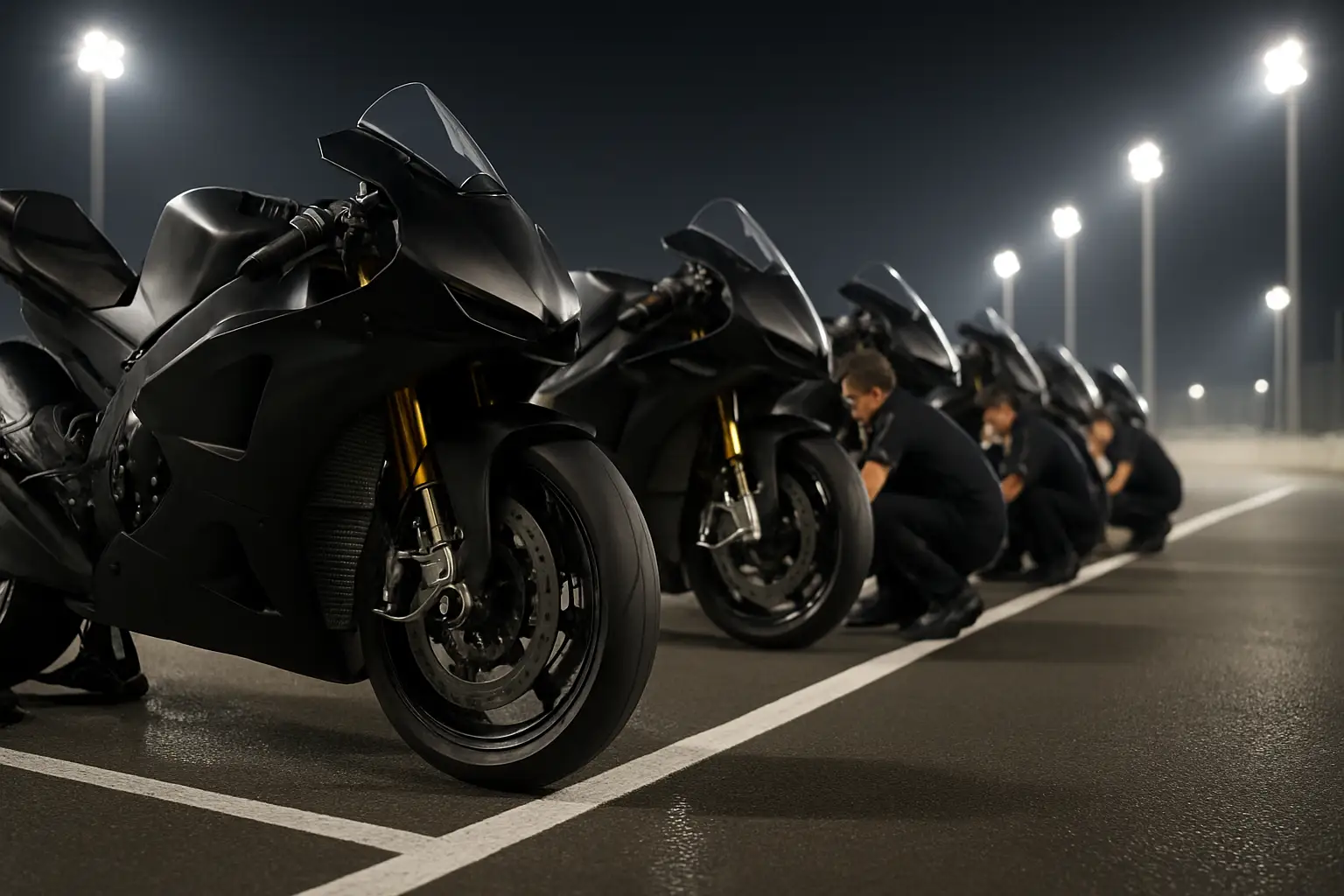
MotoGP's governing body has moved to ban front holeshot devices from the Dutch TT at Assen onward, ending the use of one of the paddock's more controversial pieces of launch technology mid-season. The ruling, first reported by MCNews, draws a line under a system that teams have been developing and deploying for several years.
Front holeshot devices work by temporarily lowering the front of the motorcycle at the start, reducing wheelie risk and helping riders get drive off the line faster. Combined with rear holeshot systems, which compress the rear suspension to keep the bike low and stable, they gave teams an edge in those critical first seconds of a race.
The ban applies from Assen, meaning teams must arrive at the Dutch circuit without the front systems fitted and competing. Any races run before Assen this season were not affected by the new rule.
What the Devices Actually Do
To understand why the ban matters, it helps to know what these systems are. A front holeshot device mechanically locks the front fork in a compressed position before the start. When the rider triggers a release, the fork extends back to its normal ride height. That brief period of low front geometry helps keep the front wheel on the ground under hard acceleration, translating engine power into forward momentum rather than lifting the wheel skyward.
Teams across the MotoGP grid invested heavily in refining these systems. Some designs were more sophisticated than others, and the performance gap between those with well-developed front holeshot hardware and those without became noticeable enough to draw scrutiny from regulators.
Rear holeshot devices, which perform a similar function at the back of the bike, are not covered by this ban and remain legal. The regulation targets only the front axle system.
Why Assen and Why Now
The timing of the ban mid-season is unusual. Regulatory changes in MotoGP typically come at the start of a new season, giving teams the winter to adjust their designs. Implementing a ban partway through a championship can shift the competitive order and draws attention to whatever prompted the urgent action.
No detailed official explanation has been widely published alongside the ban, but mid-season technical interventions in MotoGP are generally driven by safety concerns, cost control pressures, or a view from the technical department that a system has gone beyond the spirit of the regulations. The front holeshot debate had been ongoing in the paddock for some time, with questions raised about complexity and whether such devices align with the series' broader direction.
Assen, one of the oldest and most celebrated circuits on the MotoGP calendar, becomes the dividing line. Races at the venue and every round that follows will be contested without front holeshot hardware.
What It Means for the Championship
The ban introduces a variable into the second half of the season. Teams that built their launch procedures around a reliable front holeshot system now have to recalibrate. Start performance in MotoGP is high stakes. A poor start on a circuit where overtaking is difficult can cost a rider multiple positions that are hard to recover over a race distance.
Manufacturers with strong rear traction control software and well-sorted clutch delivery may absorb the change more easily. Others could find their start-line advantage shrinks. For title contenders, any disruption to a finely tuned routine carries risk.
Riders and crew chiefs will spend time before Assen working on alternative launch settings. Whether that means leaning harder on electronics or adjusting rider technique, the adjustment period will be short given the pace of the MotoGP calendar.
The series continues to balance technical innovation with the practical demands of competition parity and cost. Removing the front holeshot device from the equation is a concrete step in that direction, and the effects will become clear once the lights go out in the Netherlands.


MotoGP Correspondent
Luca Moretti is 21.fun's MotoGP correspondent, following the championship from free practice to the podium with an eye for race strategy and tech.