When a Flag in Football Is Actually a Good Thing
Penalty flags are usually dreaded in football, but there are moments when a flag on the field works in a team's favor. Here's why.


The Flag That Changes Everything
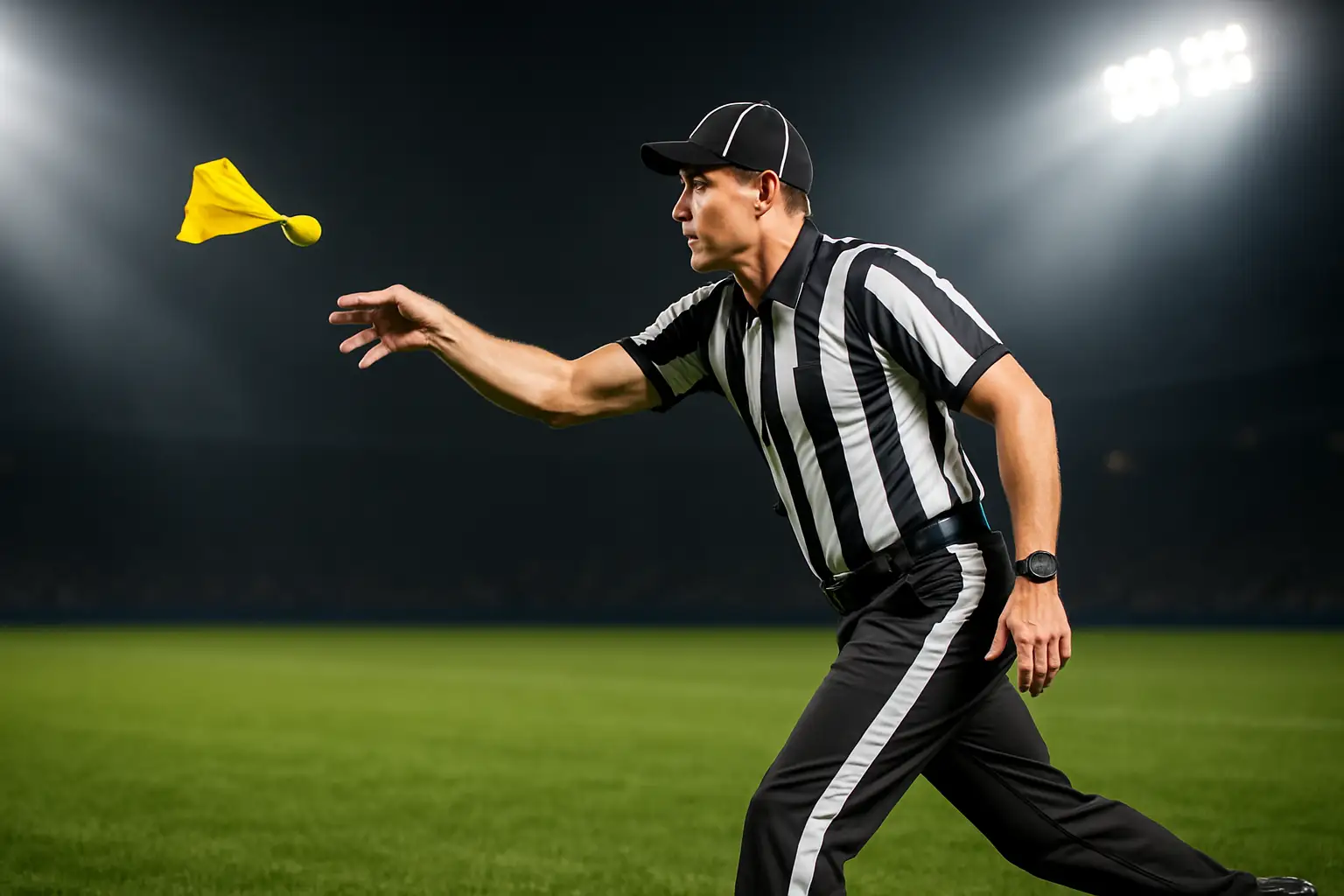
A flag in football is rarely welcomed. Players brace, coaches grimace, and fans groan the moment a yellow penalty marker hits the turf. But the flag in football is not always bad news. In specific situations, a penalty called against the opposing team can flip field position, extend a drive, or wipe out a punishing defensive play, turning a moment of dread into a genuine advantage.
The Community News recently highlighted this counterintuitive reality, pointing out that flags can sometimes be the best thing to happen to a team on a given play. The observation cuts against the grain of how most fans instinctively react to officiating stoppages.
How a Penalty Becomes a Lifeline
Consider a third-and-long situation deep in a team's own territory. The offense fails to convert, the punt unit trots out, and it looks like possession is about to change. Then a flag drops on the defense for a personal foul or pass interference. Suddenly the offense has new life, a fresh set of downs, and potentially 15 extra yards. The failed play never happened in any meaningful sense.
Pass interference calls are among the most impactful flags in football. A defensive back who grabs a receiver before the ball arrives can hand the offense a spot foul, placing the ball at the point of the infraction. On a 40-yard attempt, that is a 40-yard gain without a single yard being run after the catch.
Personal fouls work similarly. A late hit out of bounds or a roughing-the-passer penalty not only advances the ball but also awards an automatic first down, regardless of the original down and distance.
Flags That Erase Big Plays Against You
The other side of the coin is equally significant. A defense that just surrendered a 60-yard touchdown run can exhale when an illegal block in the back or a holding call wipes the play off the scoreboard. The points disappear, the field position resets, and momentum shifts entirely.
Special teams units live by this reality. A kick returner who takes one to the house only to see a block penalty flag the play back understands the deflation personally. For the team that was scored on, though, that same flag is a reprieve.
Offensive holding calls that cancel a big gain are frustrating for the offense, but for a defense that was just gashed for 30 yards, the flag is a gift. The yardage comes back, the down repeats, and the defense gets a second chance to make a stop.
Reading the Flag Correctly
Part of being a savvy football fan or player is learning to read which team a flag benefits before the referee even announces the call. The color of the flag does not change, but its meaning is entirely contextual.
Coaches drill this awareness into their players. Knowing whether to accept or decline a penalty is a decision that can alter the outcome of a game. If a defense forces a turnover on downs but the offense was flagged for a false start, the defense might decline the penalty and take the turnover instead. If the situation is reversed and the penalty is more beneficial than the play result, the team accepts.
These strategic choices happen in seconds on the sideline, often with the game on the line. The flag itself is neutral. What matters is which side of it a team stands on.
Football is a game of margins, and a well-timed penalty call, even an unwanted stoppage, can provide exactly the margin a team needs.


Football Correspondent
Alex covers football and the global game with fast, sharp analysis.