UEFA Threatens Fifa Boycott Over World Cup Sell-Off Plans
UEFA has agreed to boycott FIFA competitions if the governing body pushes ahead with plans to commercialise the World Cup, according to reporting by The Guardian.


UEFA Draws a Hard Line on FIFA's Commercial Ambitions
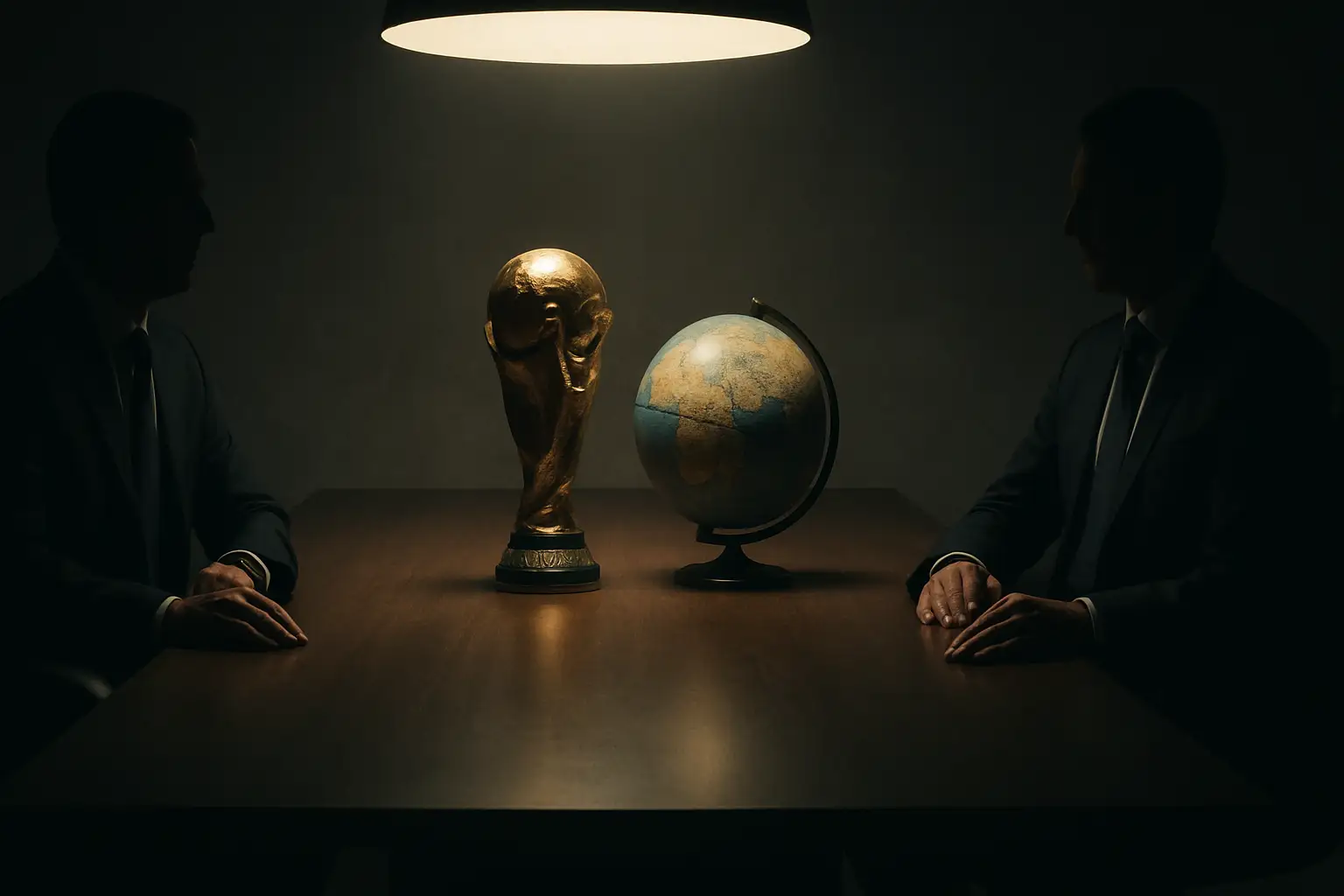
Europe's football governing body UEFA has agreed to pull its member nations out of FIFA competitions if FIFA moves forward with plans to sell a commercial stake in the World Cup, according to a report by The Guardian. The threat marks one of the sharpest confrontations between the two governing bodies in recent memory, and puts the future shape of international football under serious pressure.
The FIFA World Cup boycott threat from UEFA is not a casual warning. Member associations within UEFA have reached a collective agreement to follow through on the action should FIFA proceed with the sell-off proposals. That level of unity across European football is significant, given how much internal disagreement typically surrounds issues of this scale.
FIFA has been exploring ways to bring in outside investment tied to the World Cup, one of the most valuable sports properties on the planet. Any arrangement that transfers a share of commercial control to private investors would, in UEFA's view, fundamentally alter the nature of the tournament and the governance structures that surround it.
What the Sell-Off Plans Would Mean
The core of the dispute is about who controls the commercial future of the World Cup. FIFA's proposals, as reported, involve outside investors taking a stake in the tournament's revenues or operations. Critics argue this would shift decision-making power away from football's traditional governance structures toward private financial interests.
For UEFA, that is a line it is not prepared to see crossed. The body has long argued that football's major competitions must remain under the direct stewardship of governing bodies rather than commercial entities. The European Club Association and other stakeholders within European football have raised similar concerns in the past over proposals that they believe prioritise financial returns over sporting integrity.
A World Cup that operates with private investment at its core would raise questions about how revenues are distributed, who has influence over tournament decisions, and what obligations FIFA would owe to investors rather than to the sport's wider ecosystem.
How Serious Is the Boycott Threat?
Boycott threats in football governance disputes are not always followed through. But UEFA's reported agreement among its members gives this one more credibility than most. If European nations withdrew from FIFA competitions, the World Cup would lose the majority of its most commercially attractive teams, which would devastate the tournament's broadcast and sponsorship value.
That commercial reality gives UEFA genuine leverage. A World Cup without Germany, France, Spain, England, Portugal, and the rest of European football's major nations would be a fundamentally different and far less valuable product - precisely the outcome any private investor would want to avoid.
The standoff reflects a broader tension that has been building between FIFA and European football institutions for several years. Disputes over the international match calendar, club competition formats, and revenue distribution have all contributed to an atmosphere of mutual suspicion between FIFA's leadership and UEFA.
What Happens Next
No final decision on FIFA's commercial plans has been announced, and it remains possible that negotiations could produce a compromise that satisfies neither side entirely but avoids an open rupture. FIFA will be aware that pushing ahead in the face of a credible European boycott would carry enormous risks for the World Cup's standing and financial value.
For now, UEFA's position is clear. If the sell-off proceeds, European football will not participate in FIFA competitions. Whether FIFA treats that as a genuine red line or a negotiating position may determine how this confrontation plays out over the months ahead.


Football Correspondent
Alex covers football and the global game with fast, sharp analysis.